 Image 1 of 4
 Image 2 of 4
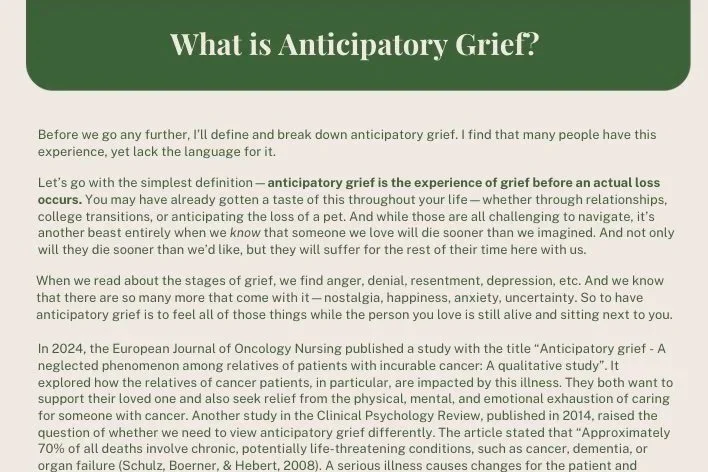 Image 3 of 4
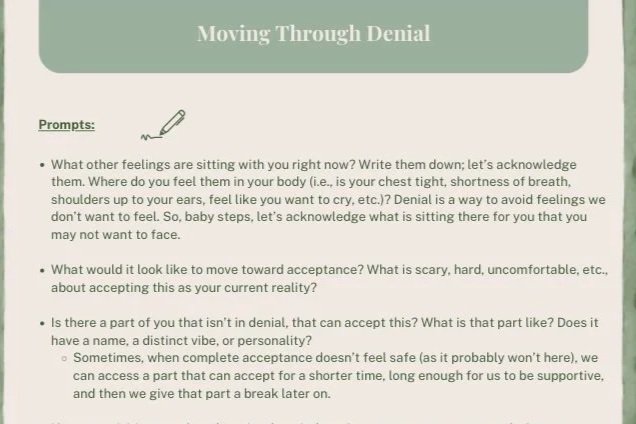 Image 4 of 4
This guidebook is created for those navigating anticipatory grief due to a loved one having a terminal illness. After experiencing this myself with my dad’s cancer diagnosis three years ago and seeing my clients deal with it, I realized there was a gap in support. Anticipatory grief and what comes with it isn’t talked about enough. I want to change that.
In this guidebook, you will find:
80+ pages where we talk about all of the emotions you may experience
Tangible evidence-based skills you can use to help you move through emotions, experiences, and challenging moments
Real-life examples from my experience with my dad to help normalize anticipatory grief
Advice for tackling difficult conversations, savoring memories, and capturing you and your loved one’s relationship
Suggestions for things like navigating the healthcare system, planning for when your loved one dies, and more
Space to explore joy, celebrations, and the love you have for your person
A place to help you realize you aren’t alone in this
Who this is for:
This guidebook is for anyone navigating the experience of having a loved one with a terminal illness, whether your loved one has just received a diagnosis or you’ve been navigating this reality for some time. You can move through at your own pace. You don't need to complete it from beginning to end or have everything figured out. Return to the sections, skills, and reflections that feel most helpful to you in whatever moment you're in.
I’ve blended my real experience with my experience as a clinical therapist. You will find therapeutic, evidence-based skills, along with creative and expressive ways to move through this time. Watching my dad go through this and grieving him while he was in front of me is something I wouldn’t wish on anyone, and yet so many of us go through this. I hope this guidebook can support you as you try to put one foot in front of the other through anticipatory grief.
Notes:
No AI was used to create this guidebook.
This is not a substitute for individualized mental health care.